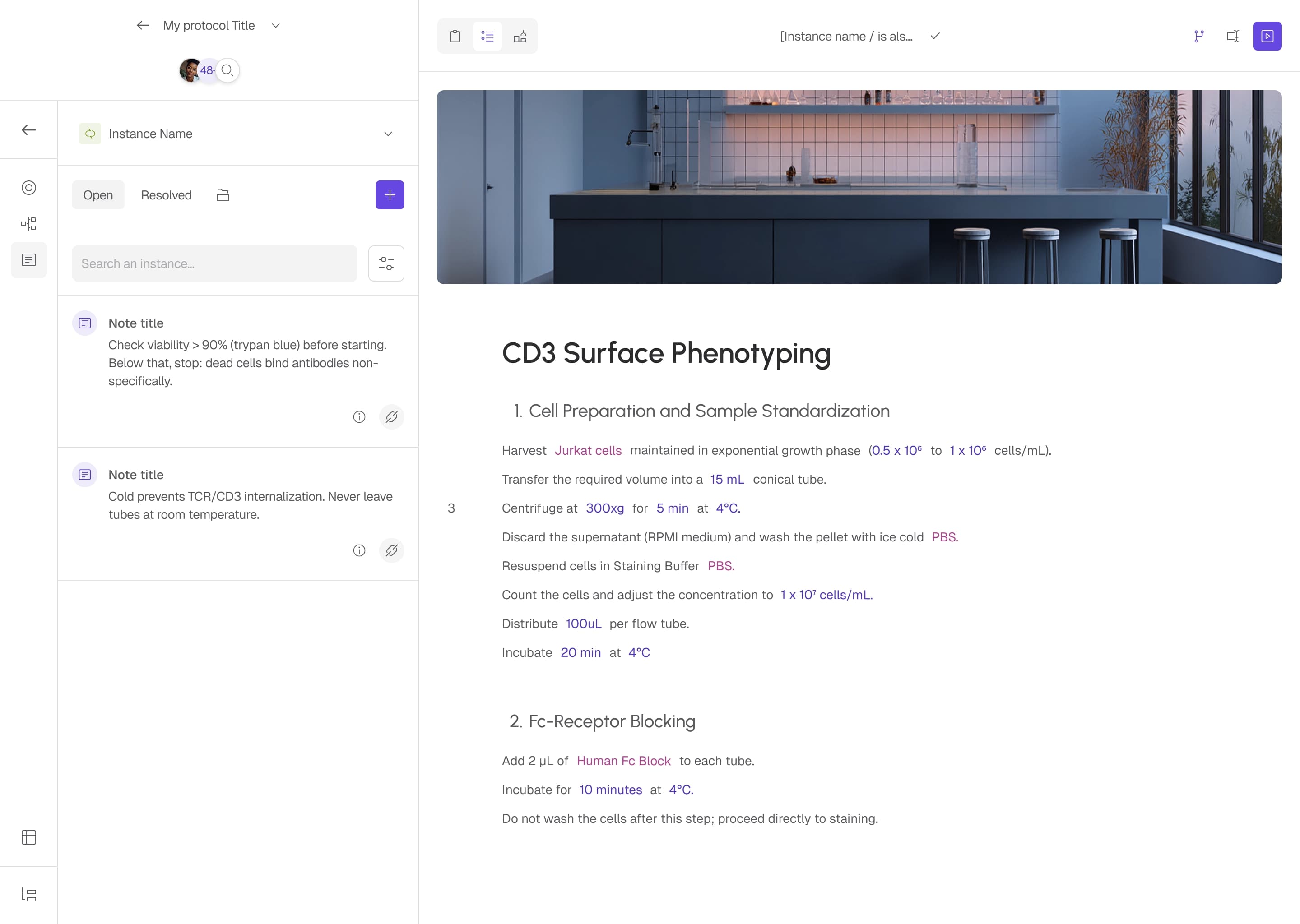

Decentralized, fully synced sample library.
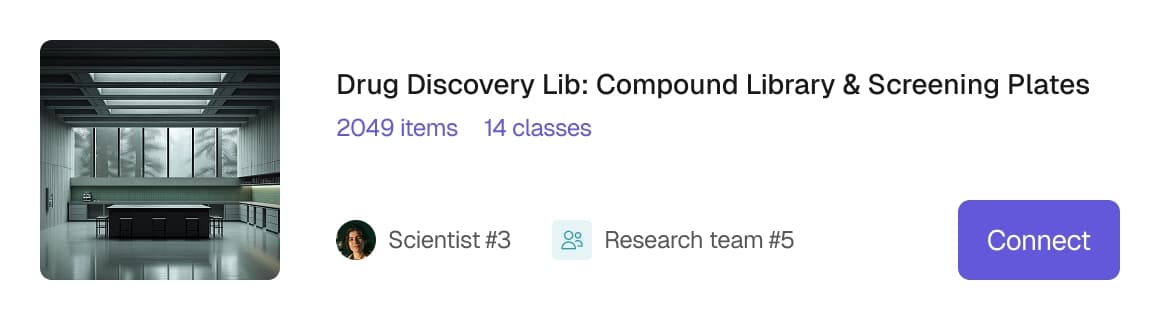
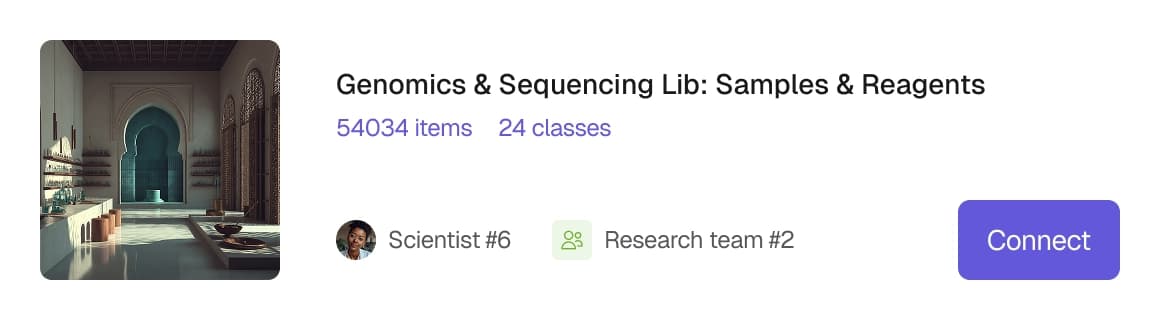
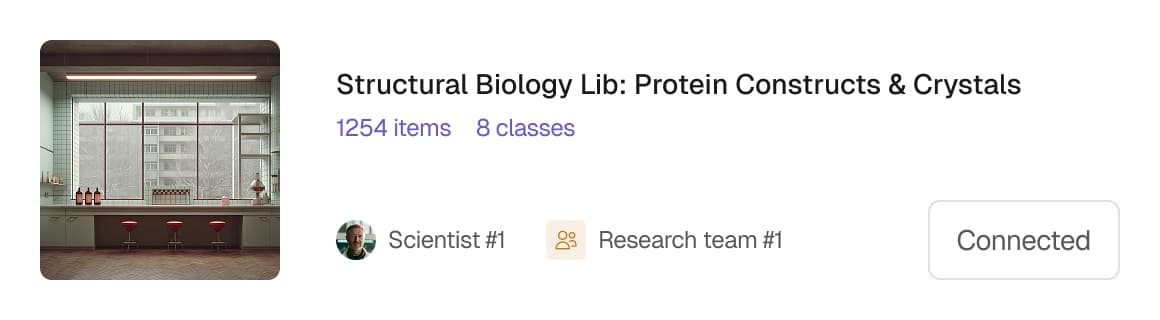
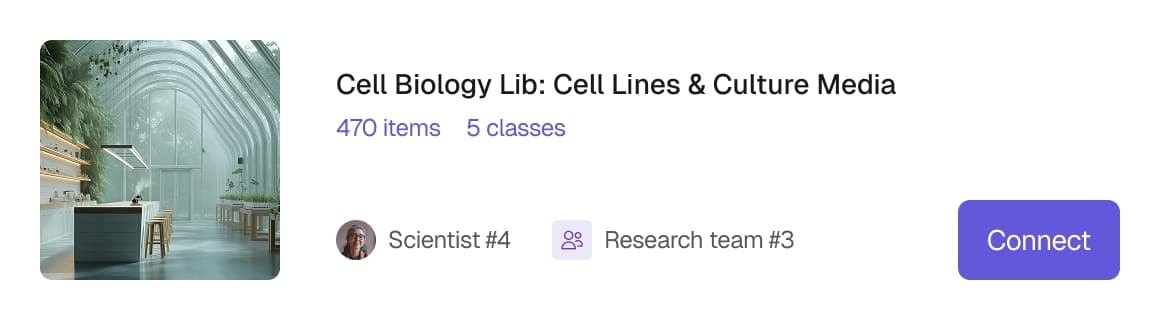
We built Library with two main goals in mind: giving each lab worker a means to work solely with their own materials while being fully synced and connected to a shared master library, and automating the maintenance process as much as we can.
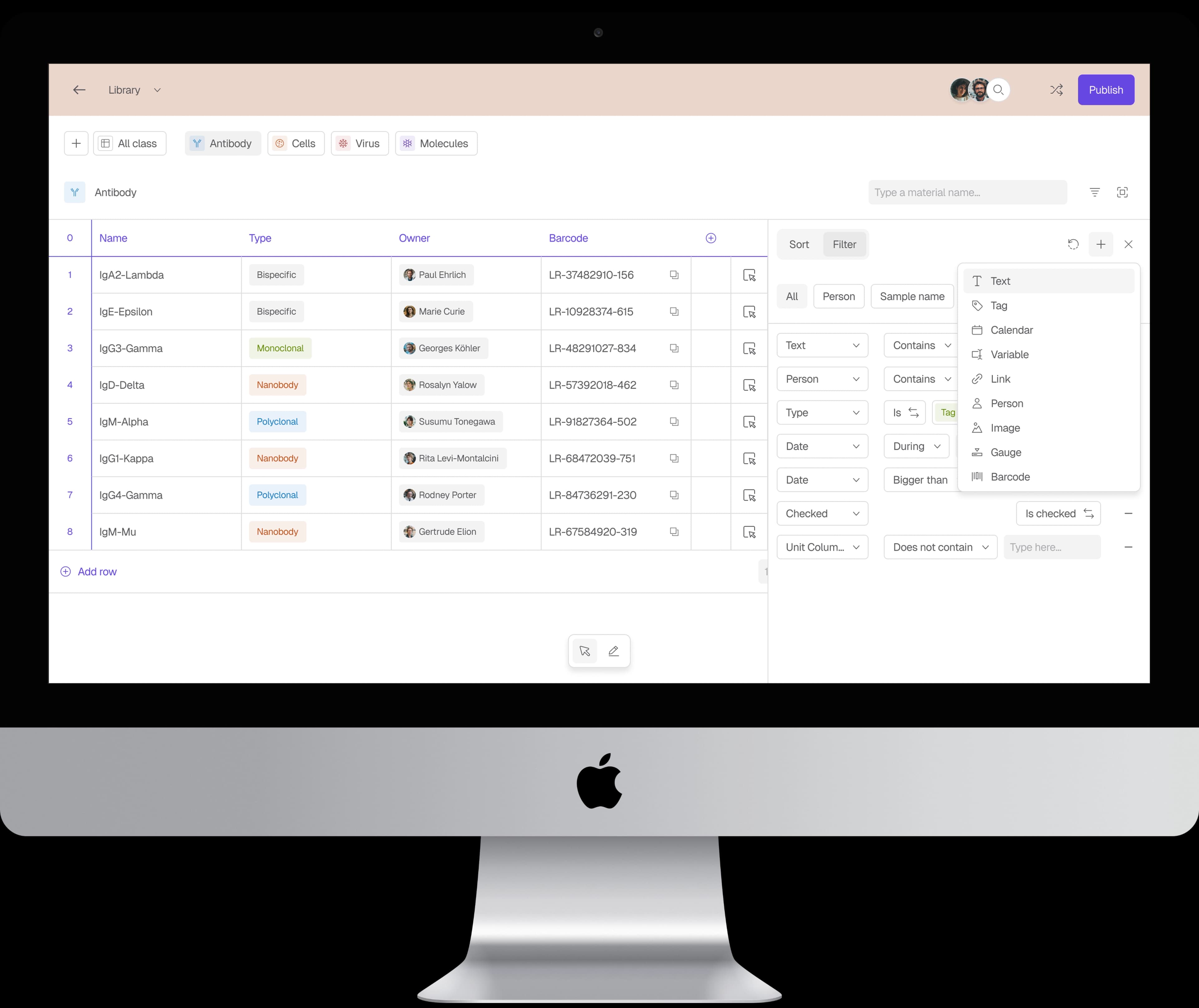
All your lab equipment, accessible in one shared space.
Antibody
Immunoglobulins that bind specifically to an epitope on an antigen, used for detection, purification or functional assays.
Bacteria
Prokaryotic strains derived from a single clone, defined by a characteristic genotype and phenotype.
Cell lines
Populations of cells of common origin that can be cultured over many passages.
Yeasts
Single-celled eukaryotic fungi, such as S. cerevisiae, used as genetic and cellular models.
Viruses
Infectious agents with no cell of their own, made of a DNA or RNA genome inside a capsid, used as study subjects or gene-delivery vectors.
Plasmids
Circular, double-stranded DNA molecules that replicate outside the chromosome, used as cloning or expression vectors.
Primers / Oligos
Short synthetic nucleic acid polymers of defined sequence, used as PCR primers, probes or guides.
Genes
DNA sequences that code for a functional product (RNA or protein), stored as constructs or references.
Proteins
Polypeptide chains folded into functional three-dimensional structures, either purified or produced by recombinant expression.
Compounds
Defined chemical entities, often small molecules, registered for their structure and biological activity.
Tissues
Organized groups of cells with a shared function, taken from an organism and stored for analysis.
Enzymes
Proteins that catalyse a specific biochemical reaction by lowering its activation energy.
Flies
Drosophila melanogaster stocks kept as defined genetic lines.
Fungi
Heterotrophic eukaryotic organisms with a chitin cell wall, kept as defined strains.
Sequences
Digital records of the order of nucleotides or amino acids in a molecule, used for design and annotation.
Plants / Botany
Plant lines, seeds and crosses kept as genetic resources.
RNAs
Ribonucleic acid molecules (mRNA, siRNA, gRNA, etc.) that are isolated or synthesized for expression or silencing studies.
Molecules
Discrete chemical entities made of atoms held together by covalent bonds, each defined by a unique structure.
Lipids
Hydrophobic or amphiphilic biomolecules (fatty acids, phospholipids, sterols) that form membranes and store energy.
Chemicals
Commercial chemical reagents (acids, bases, salts, solvents) identified by their CAS number and hazard data.
Solutions and Buffers
Prepared solutions of known composition, including buffers that keep the pH stable.
Rodents
Mice and rats kept as strains or lines (wild-type, transgenic or knockout) and used as mammalian models.
Peptides
Short chains of amino acids (usually under about 50 residues) joined by peptide bonds, made synthetically or recombinantly and used as antigens, ligands, substrates or standards.
Media
Liquid or agar-based nutrient preparations that support the growth of cells or microorganisms.
Kits
Ready-to-use commercial reagent sets with a standardized protocol, used for a specific molecular biology step such as nucleic acid extraction, library preparation or quantification.
Organize your materials into classes.
In Library, every sample category, equipment reference and other items you use in the lab gets its own space, where it can be recorded and fully documented.
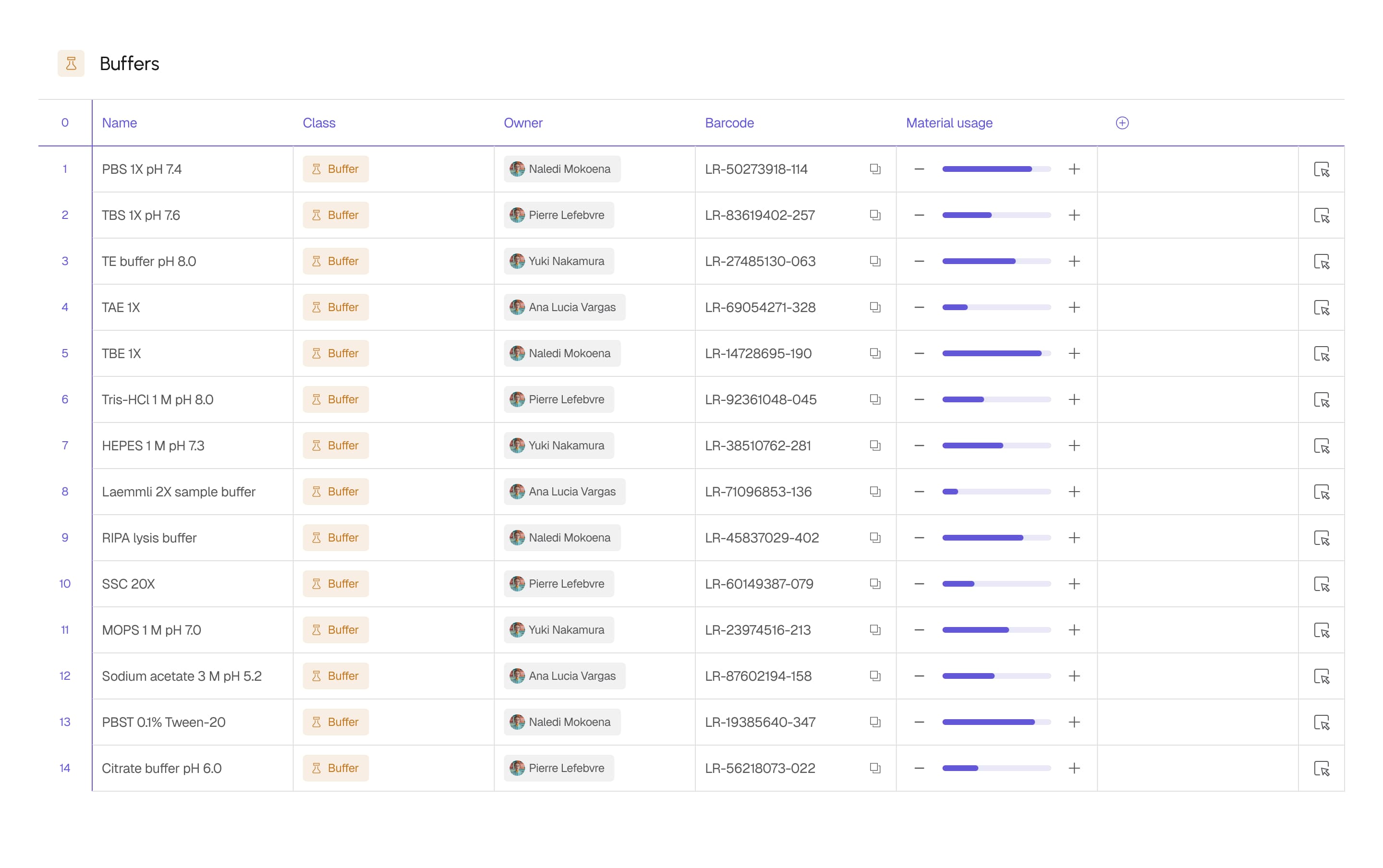
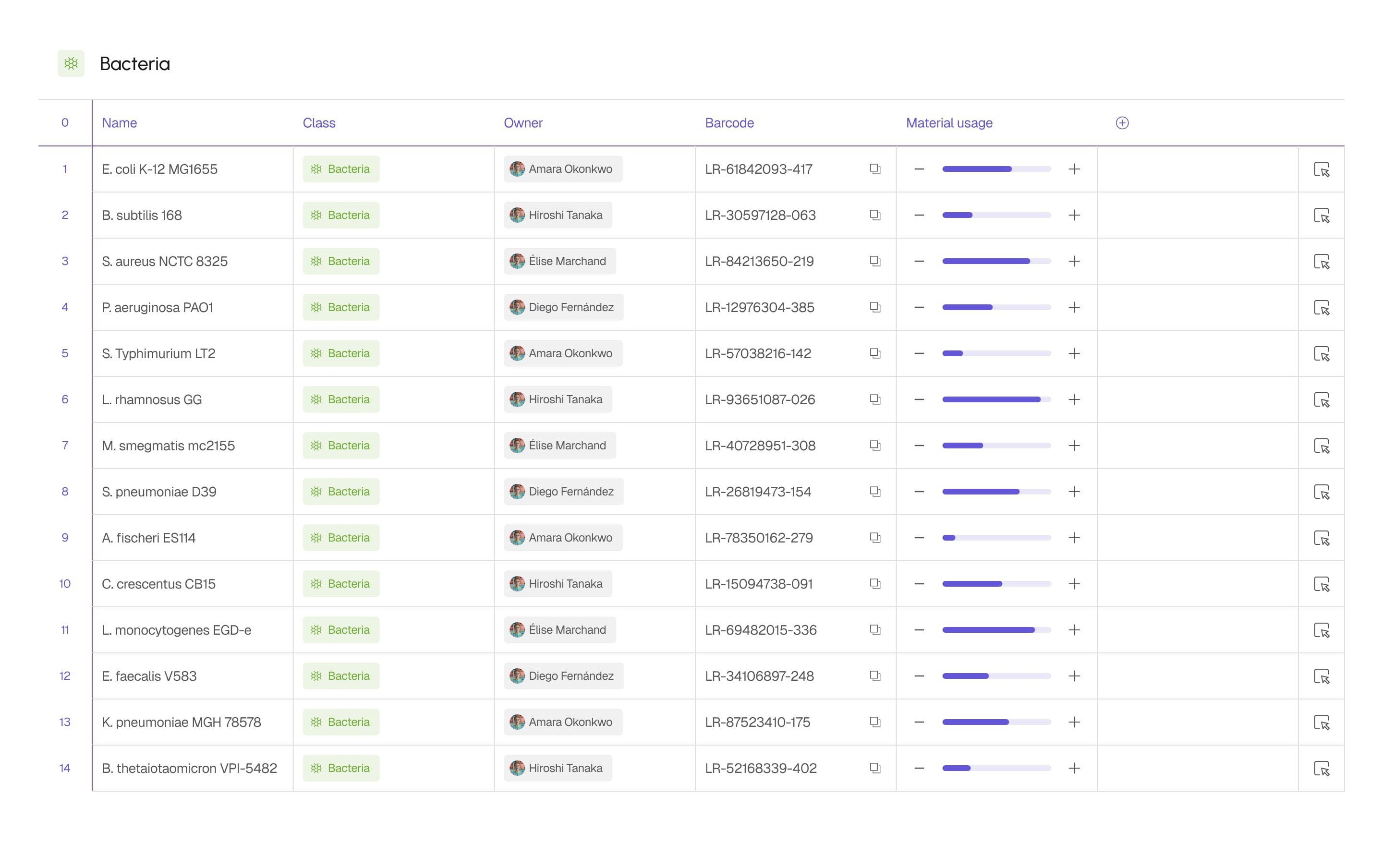
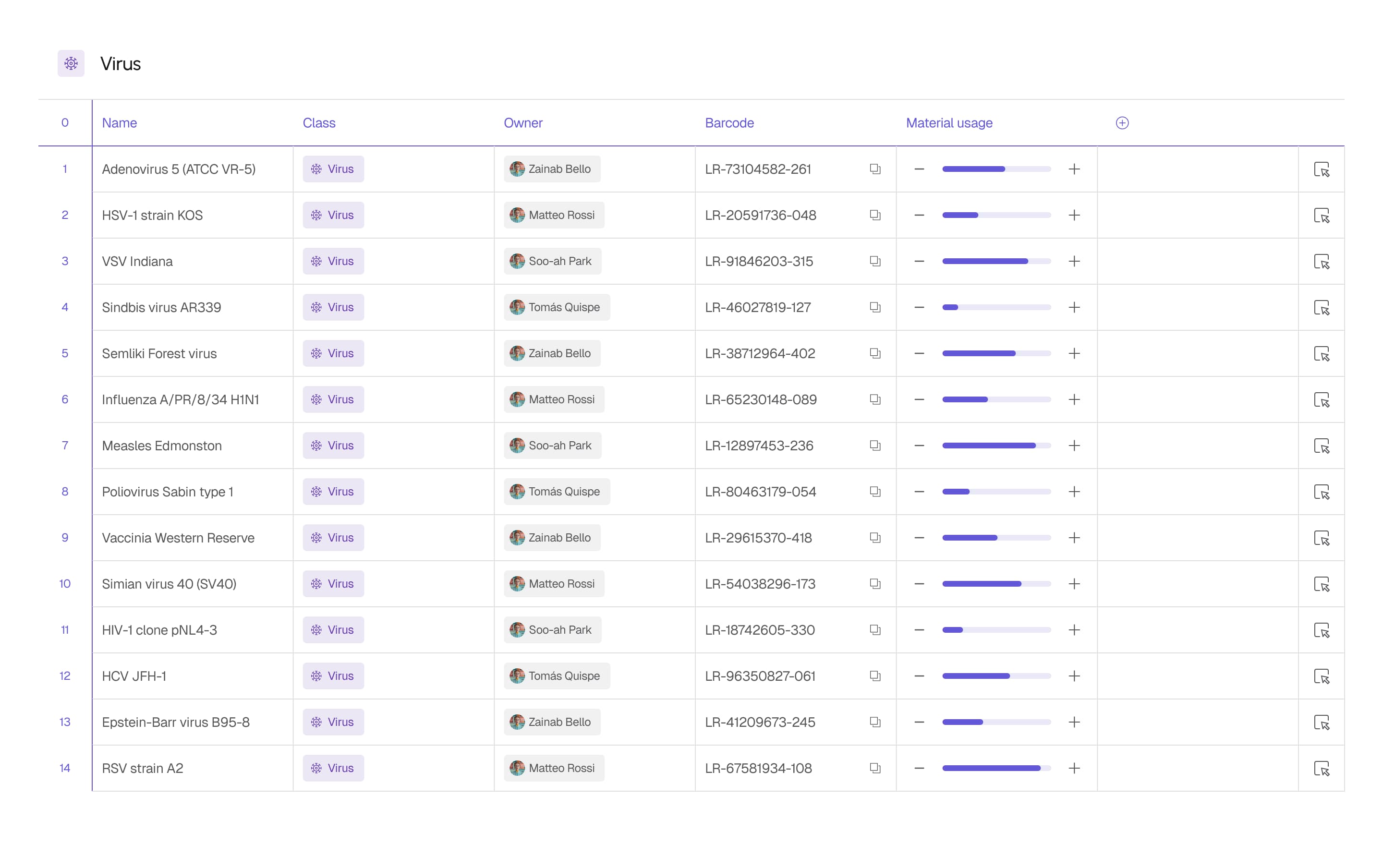
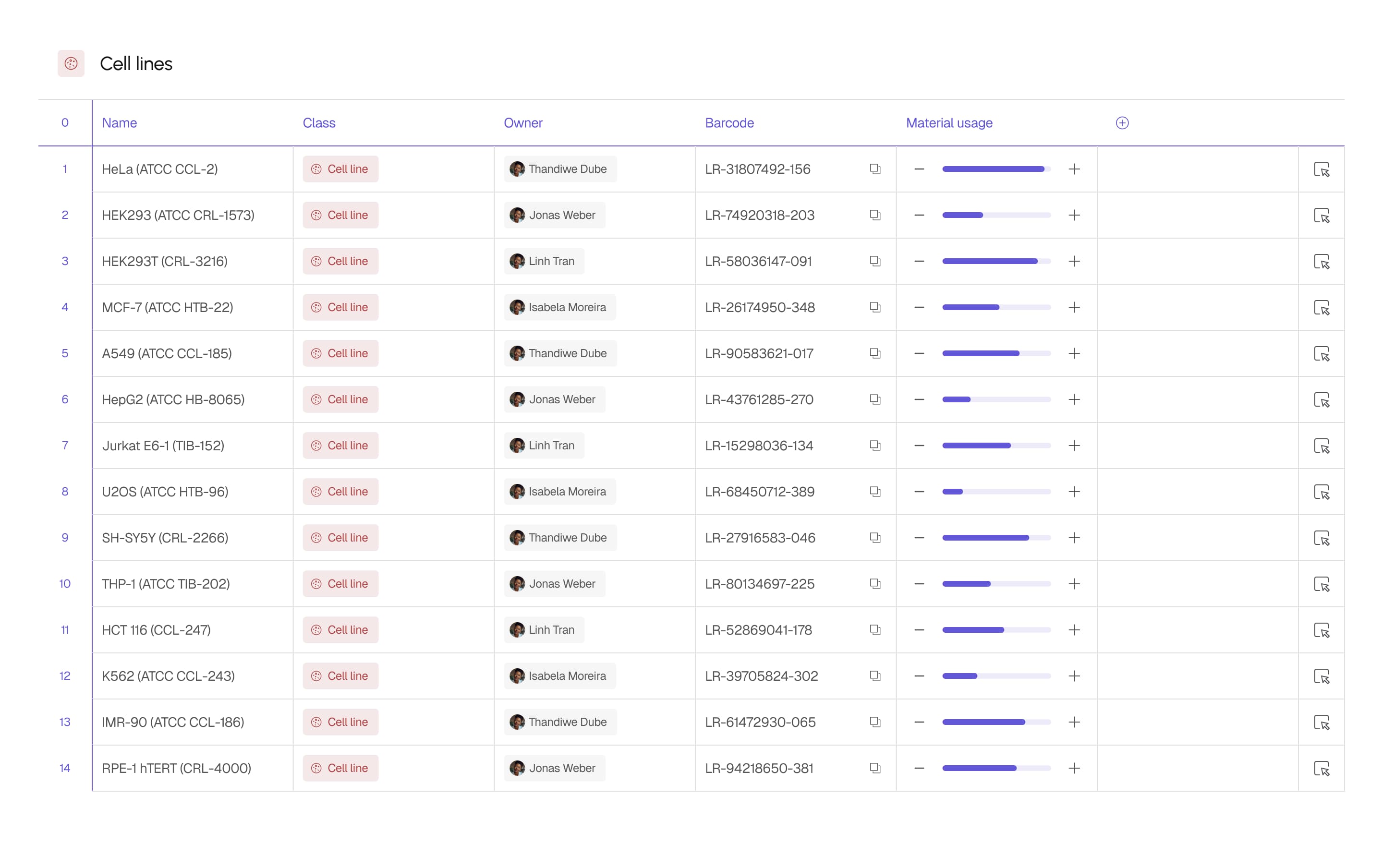
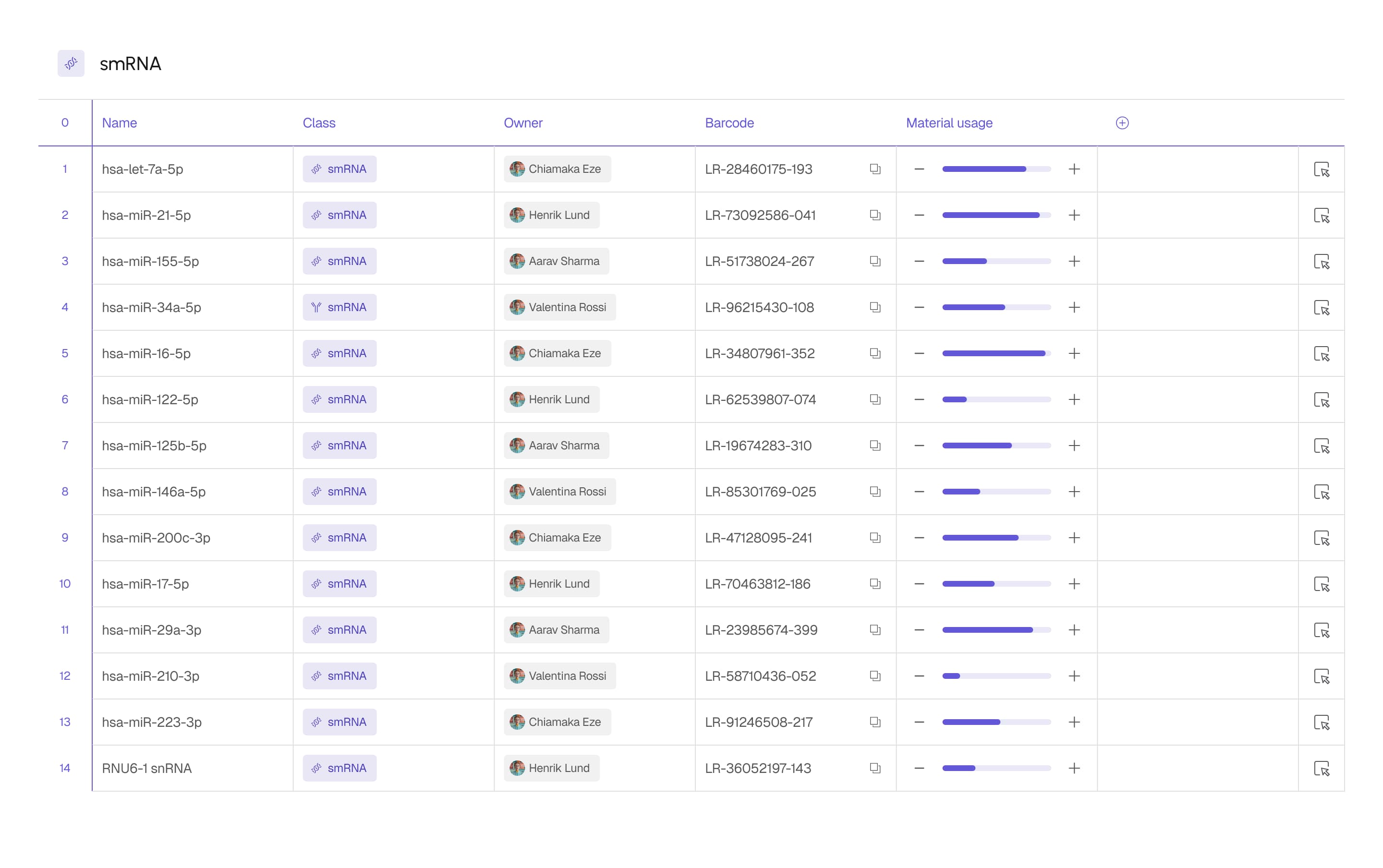
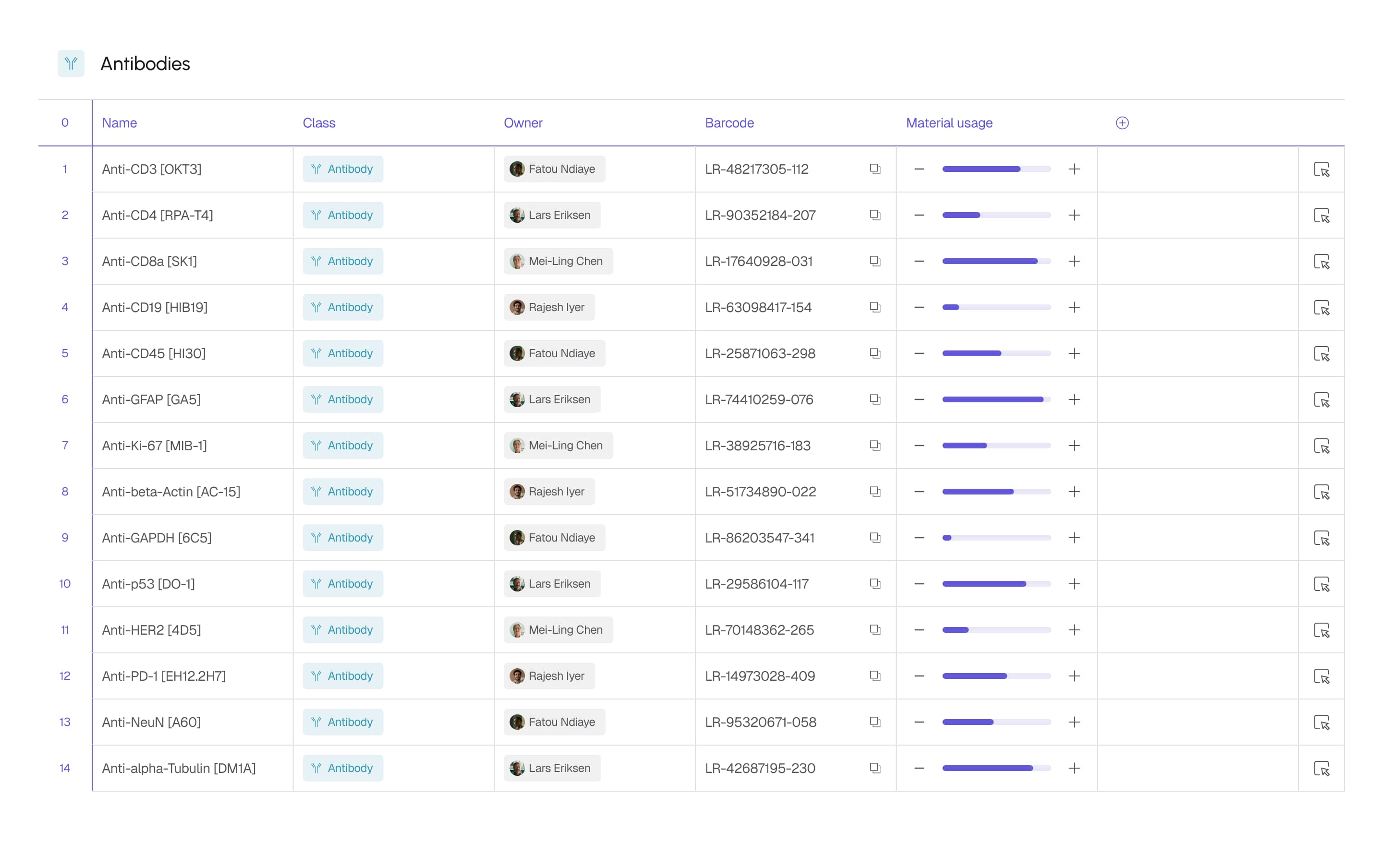
Described inside and out with rich metadata.
Each item in your library can be enriched with any metadata you choose, giving you the flexibility and completeness to manage your lab materials according to your own constraints.
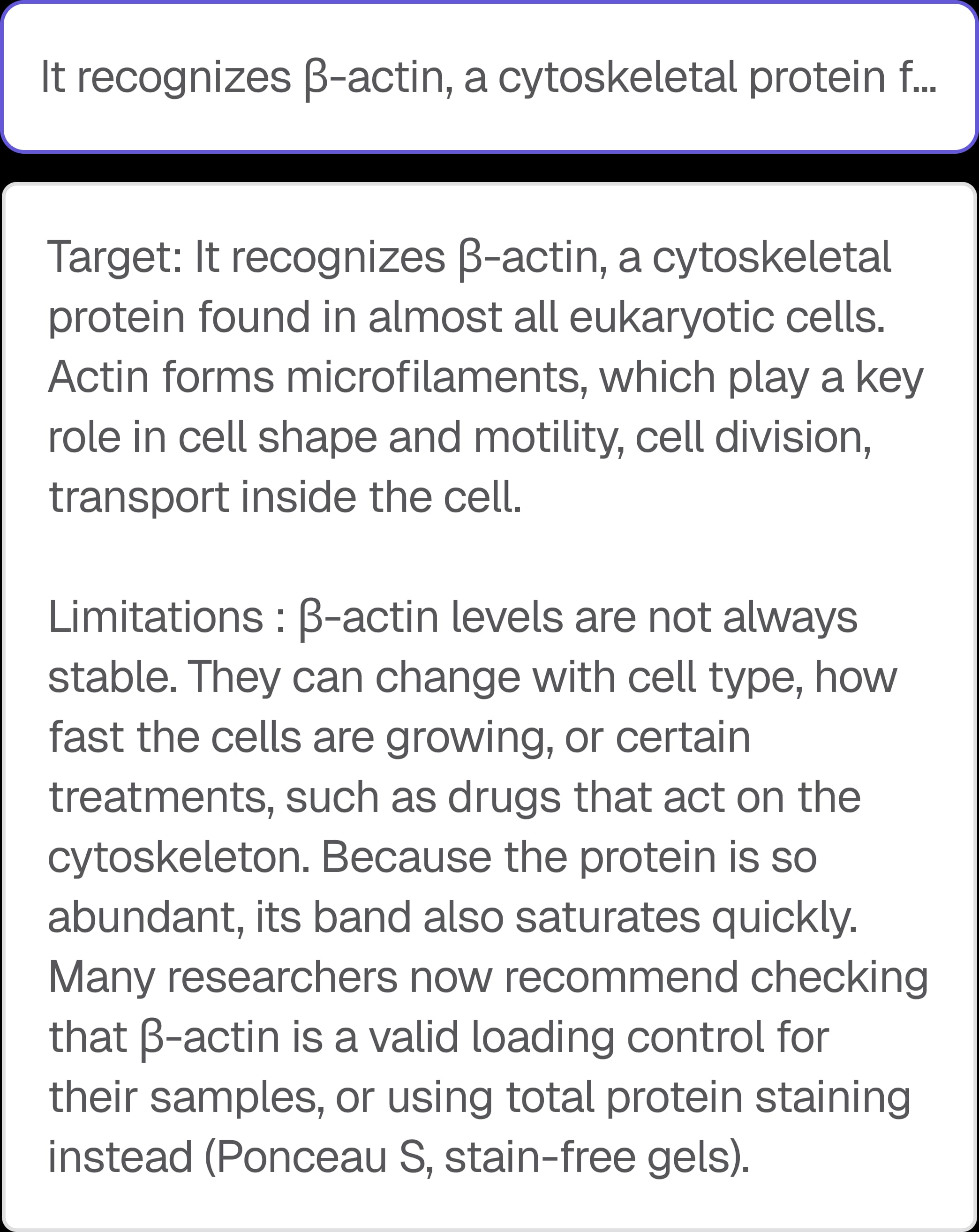
Text metadata
Captures free-form text, from titles to detailed notes.
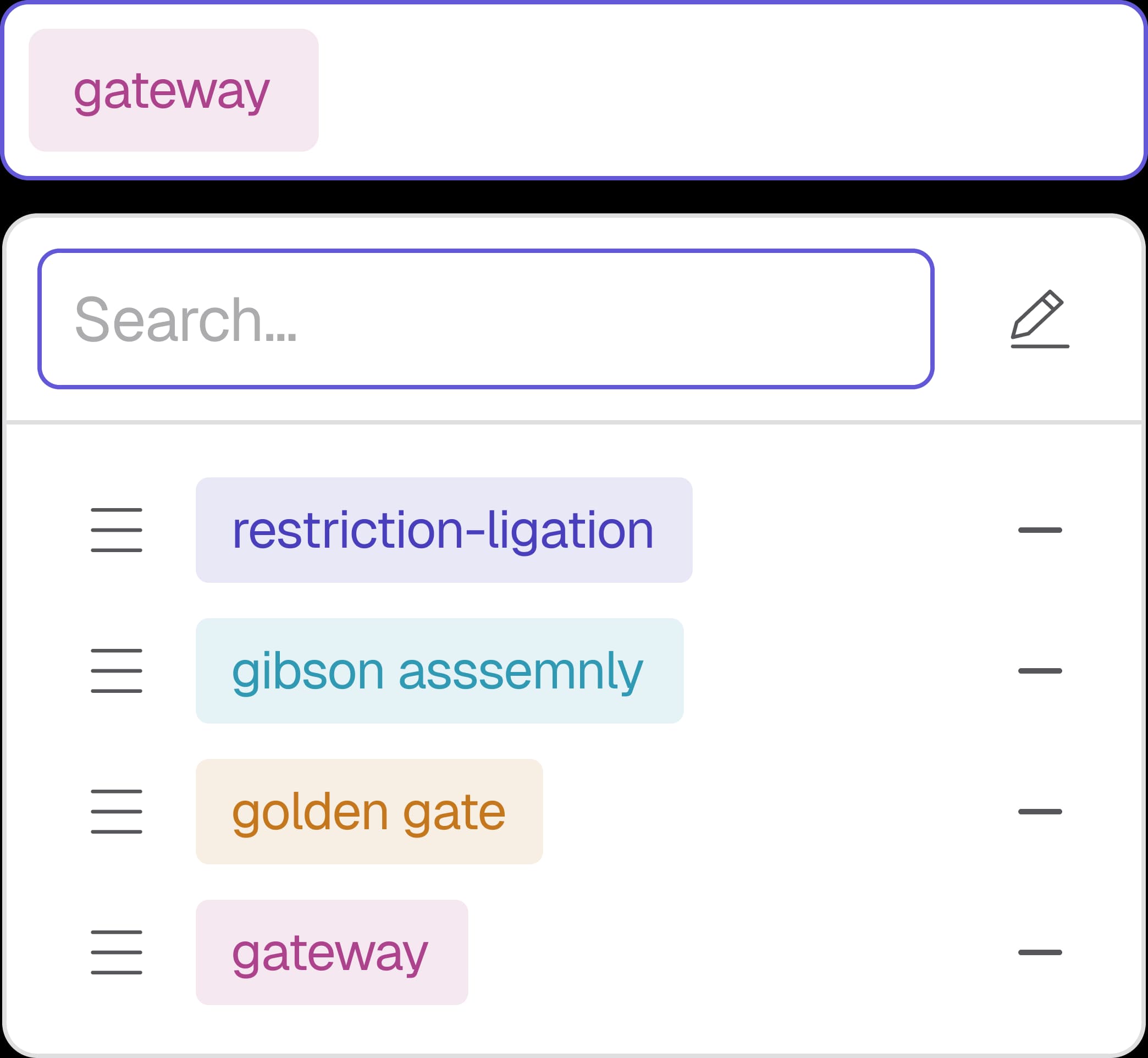
Tag metadata
Categorizes lab materials across multiple dimensions.
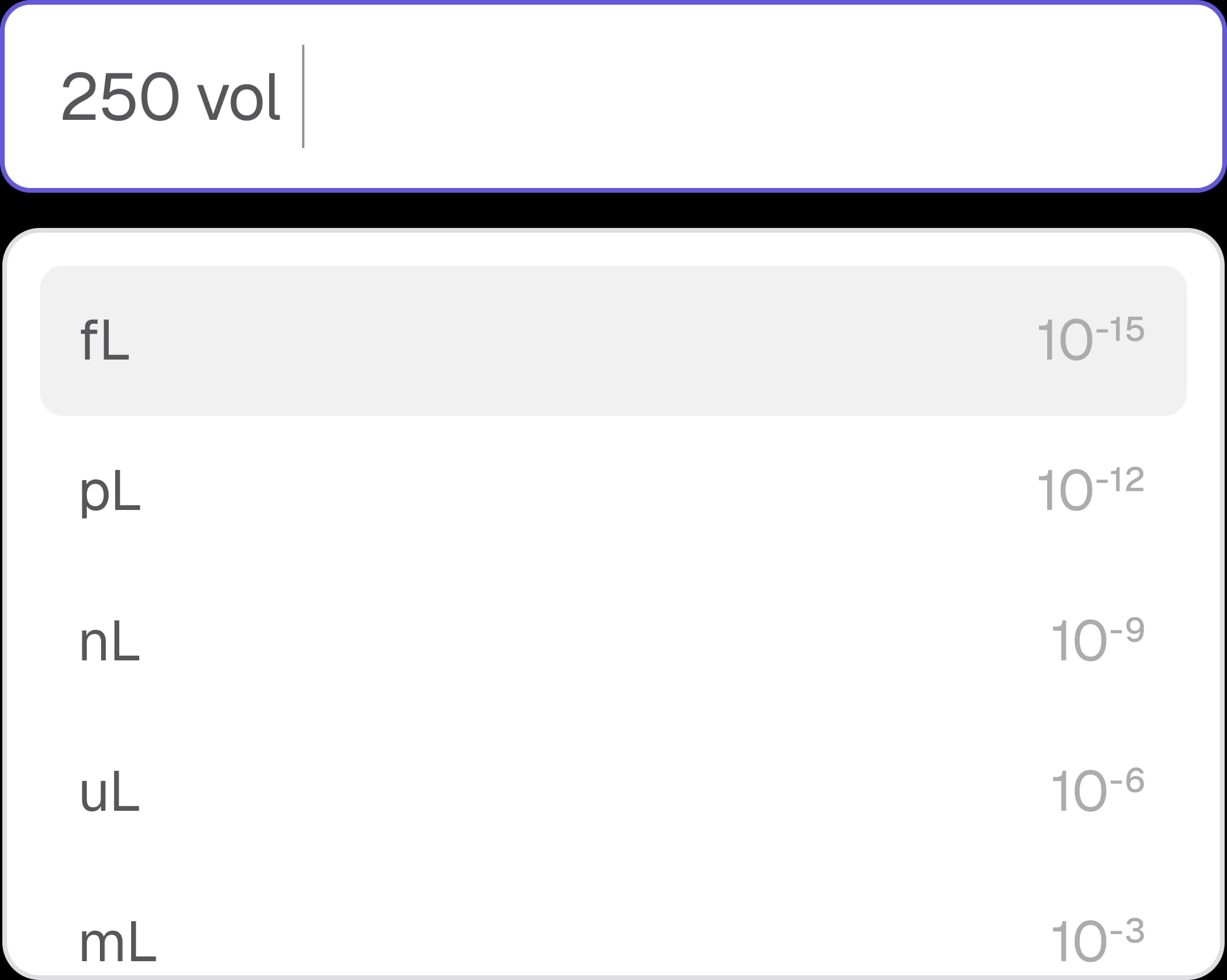
Unit metadata
Indicates measurable properties with standardized units.
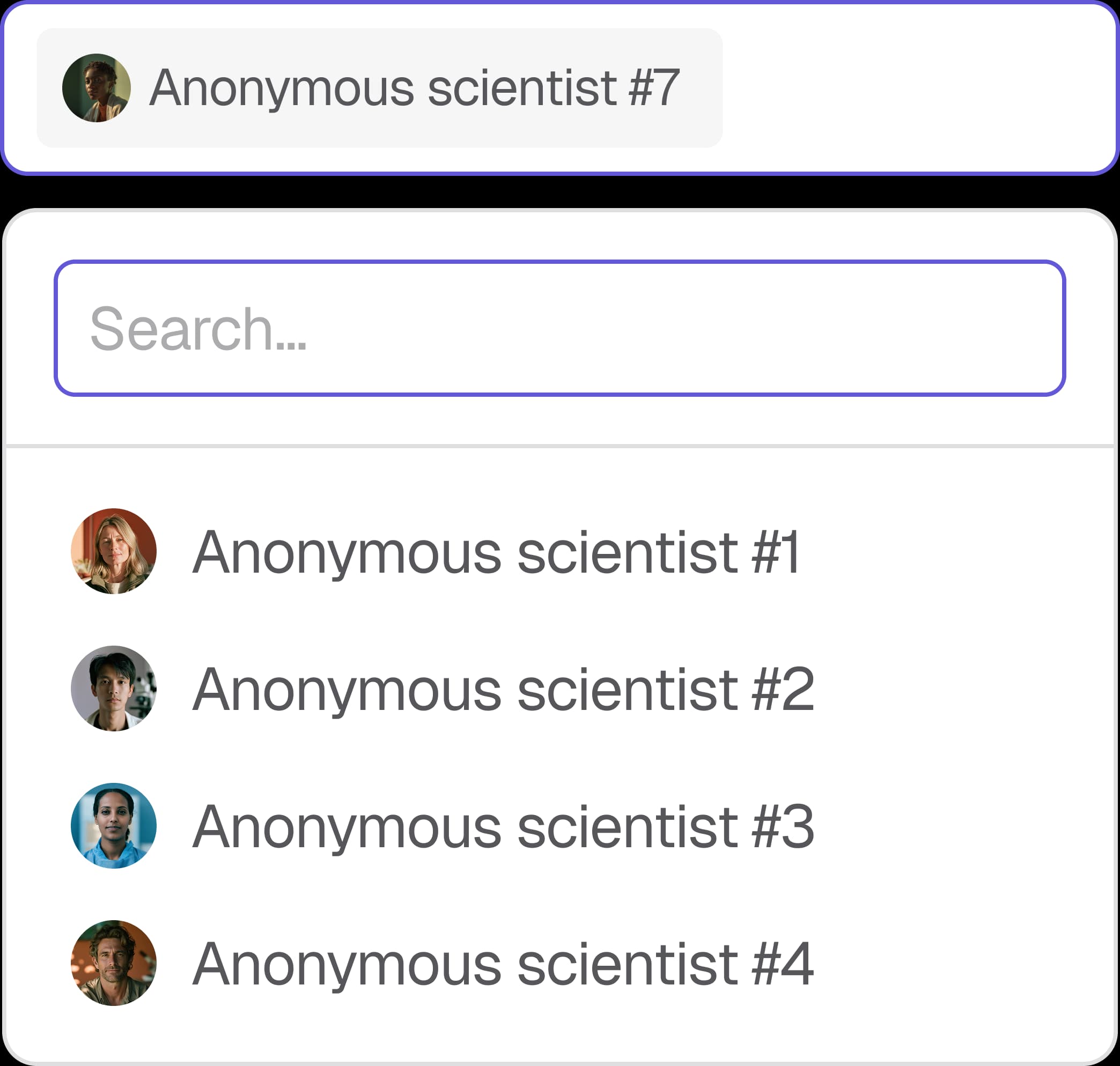
User metadata
Assigns an owner or a person in charge of a specific task.
Link metadata
Links to internal docs or external pages, such as supplier websites or key references.
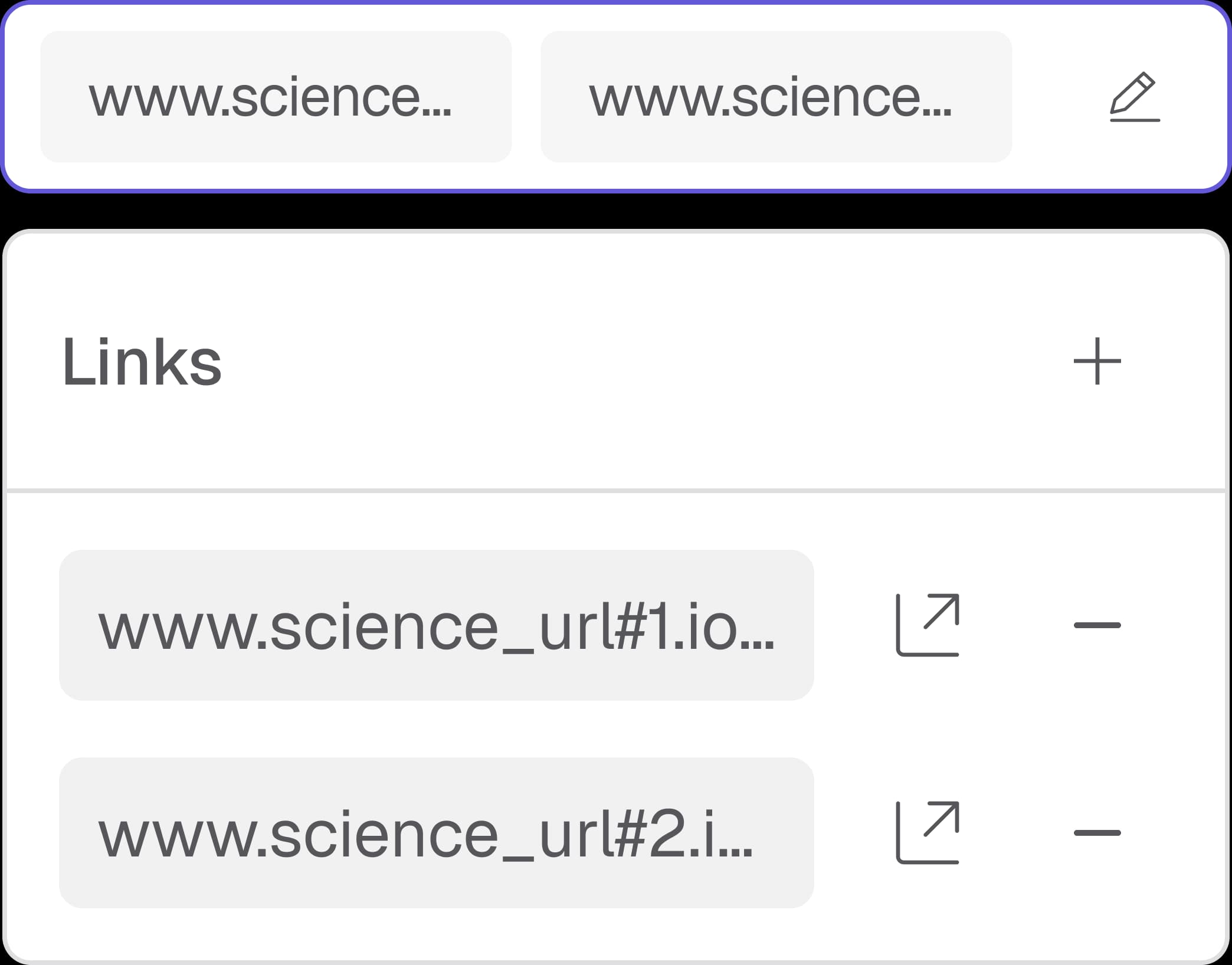
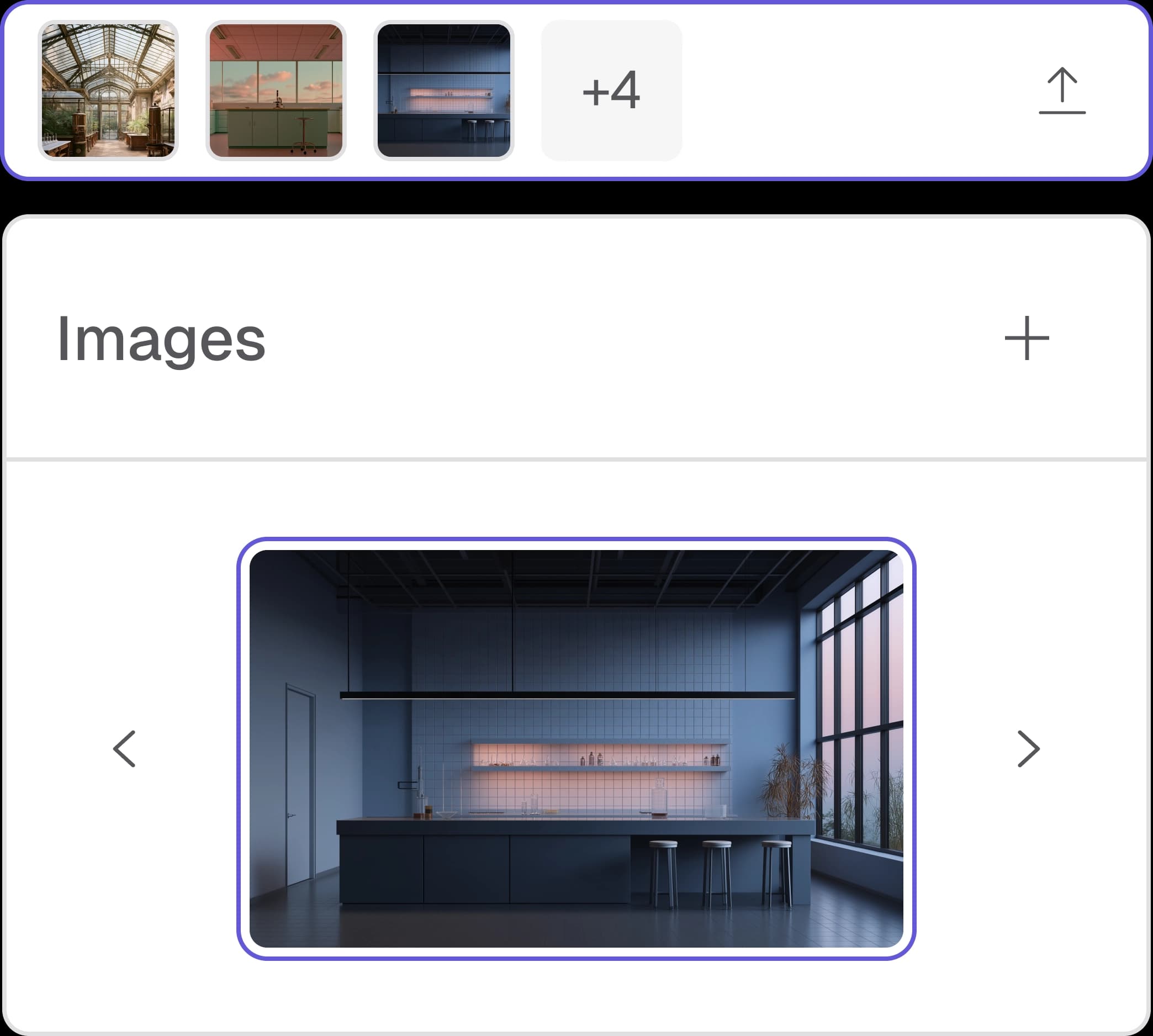
Image metadata
Attaches visual references to your material.
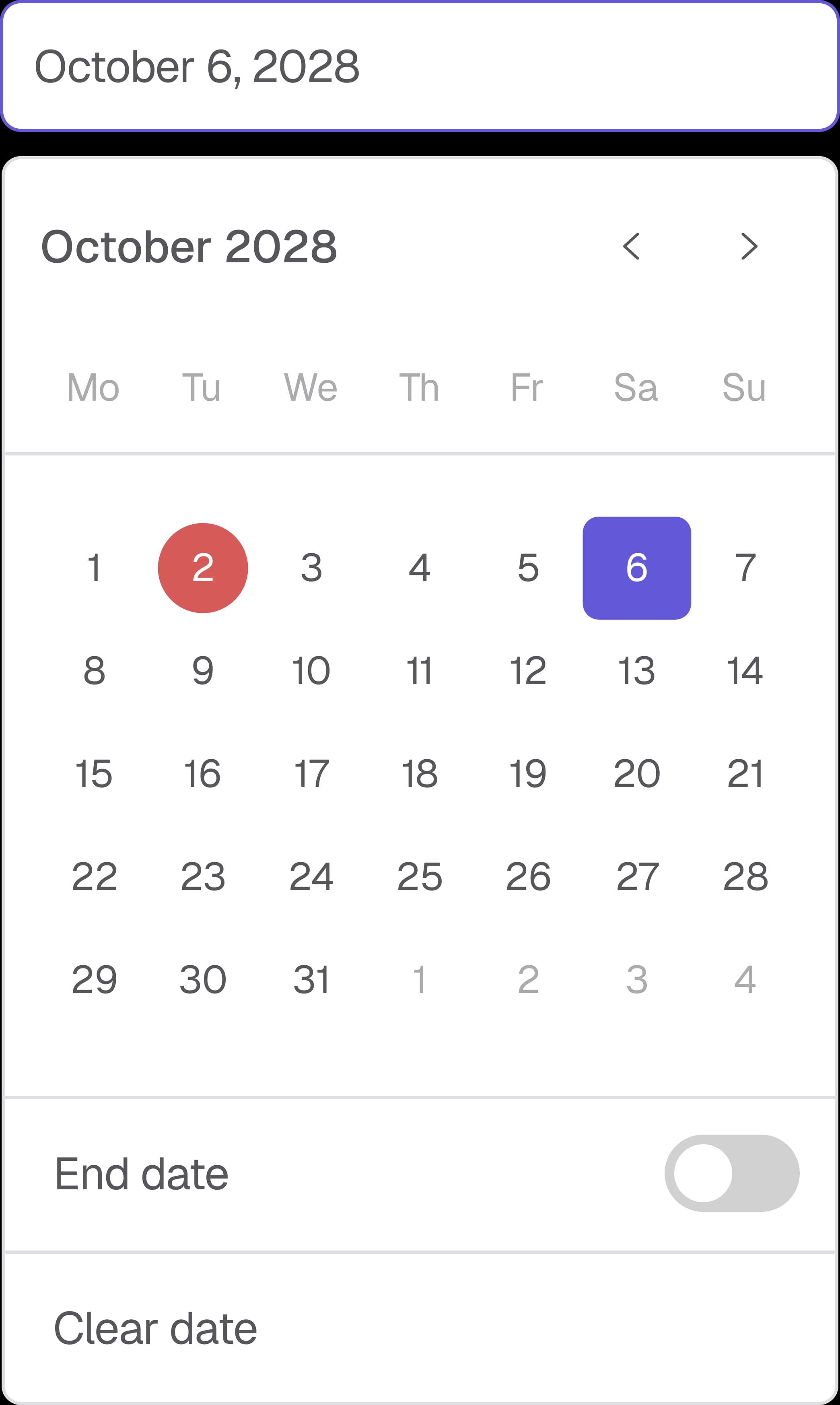
Date metadata
Tracks opening, preparation or expiry dates.
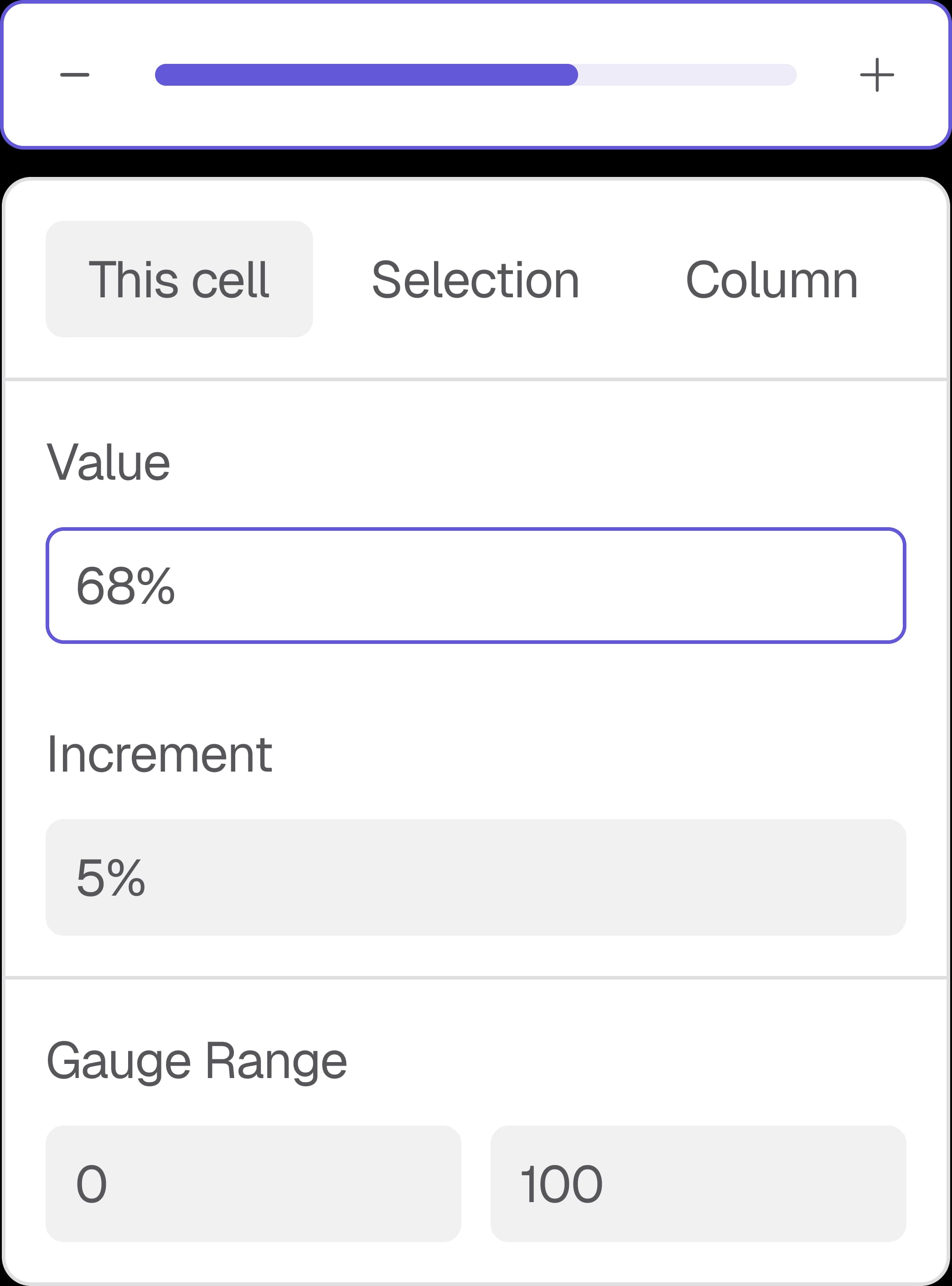
Scale metadata
Monitors material consumption.
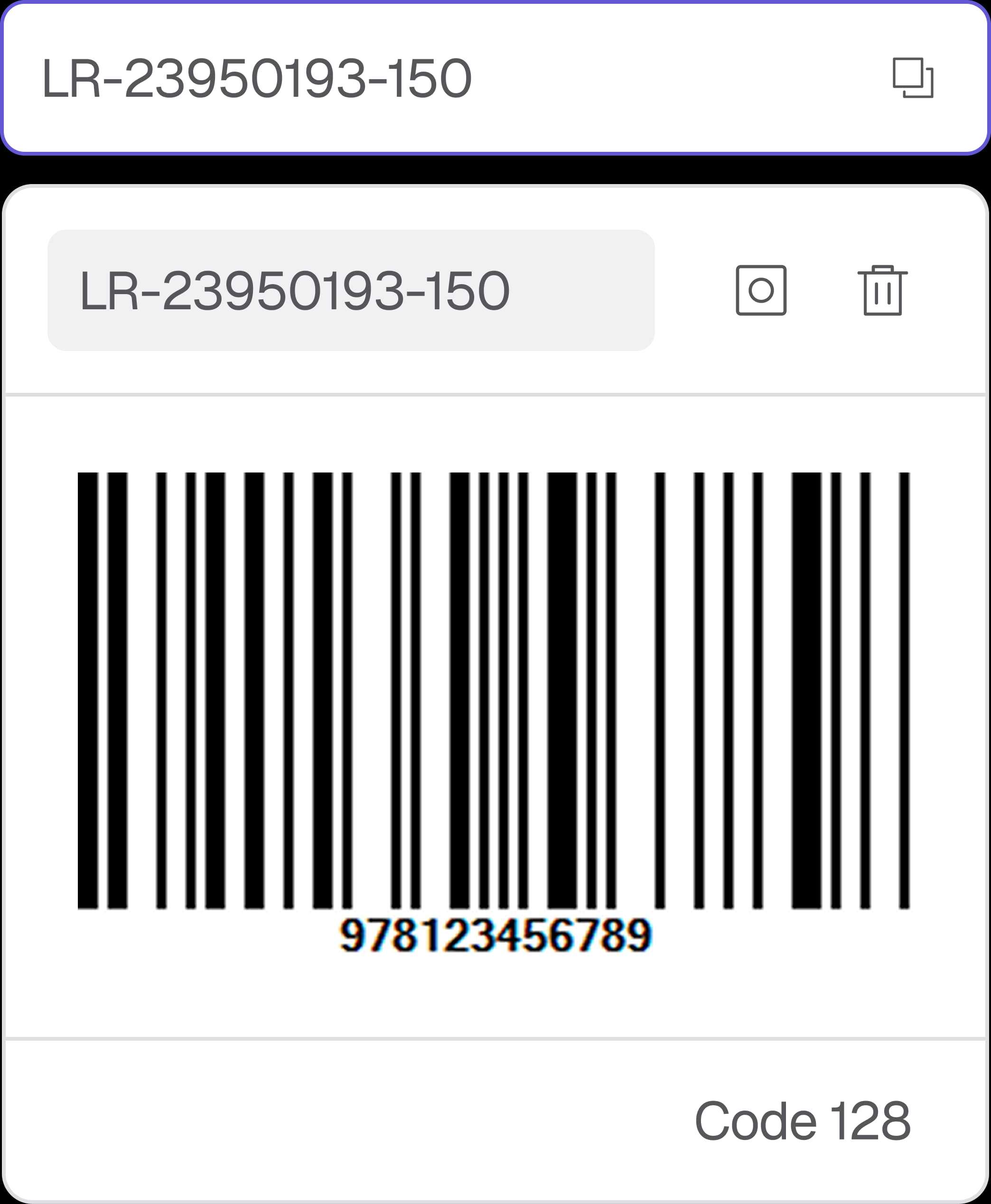
Barcode metadata
Links physical samples to their digital records.
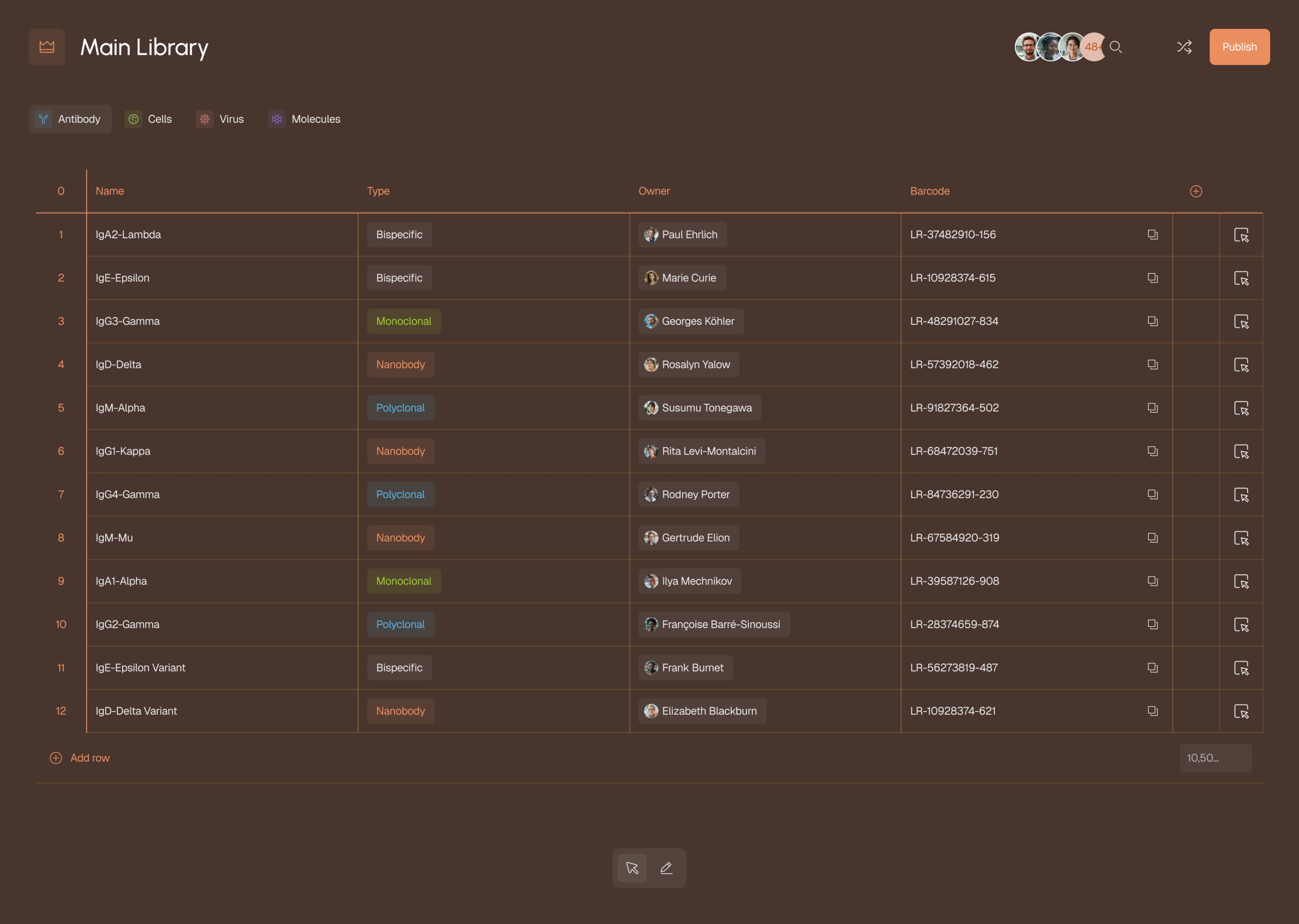
Break free. Build your own instances from a shared library.
We built a system of instances allowing you to create child libraries that rely on parts of a parent library. This helps sync any material use and update across all your research projects without the burden of having too many samples that you don’t use in your day to day library usage.
Your favorite database features, taken to the next level.
Lab notebooks do not track your lab work efficiently. This is why we invented a new tool fully dedicated to documenting all your protocol versions and variations.
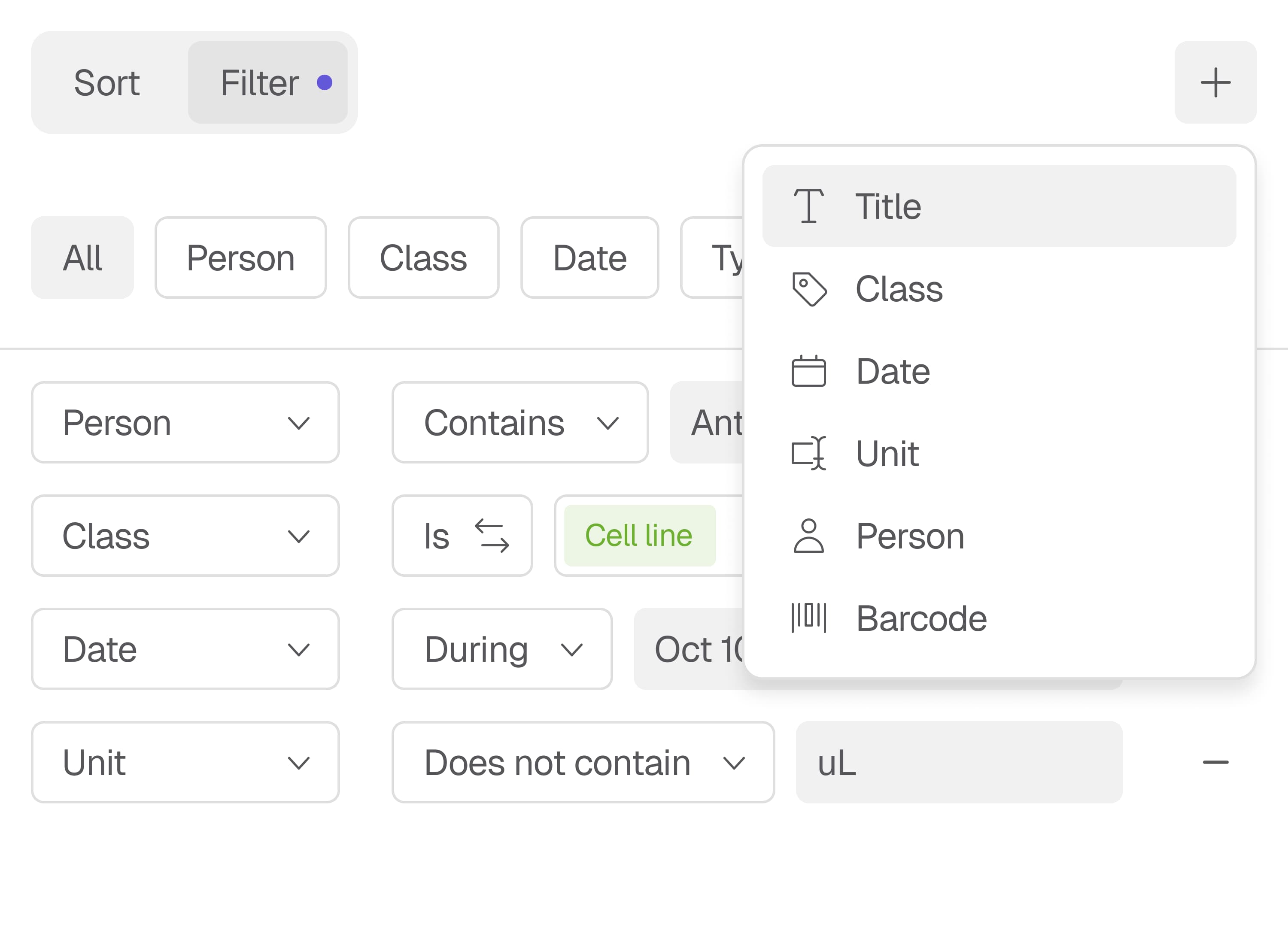
Filter
A filtering interface that keeps the number of clicks to a minimum and works at every level of your library.
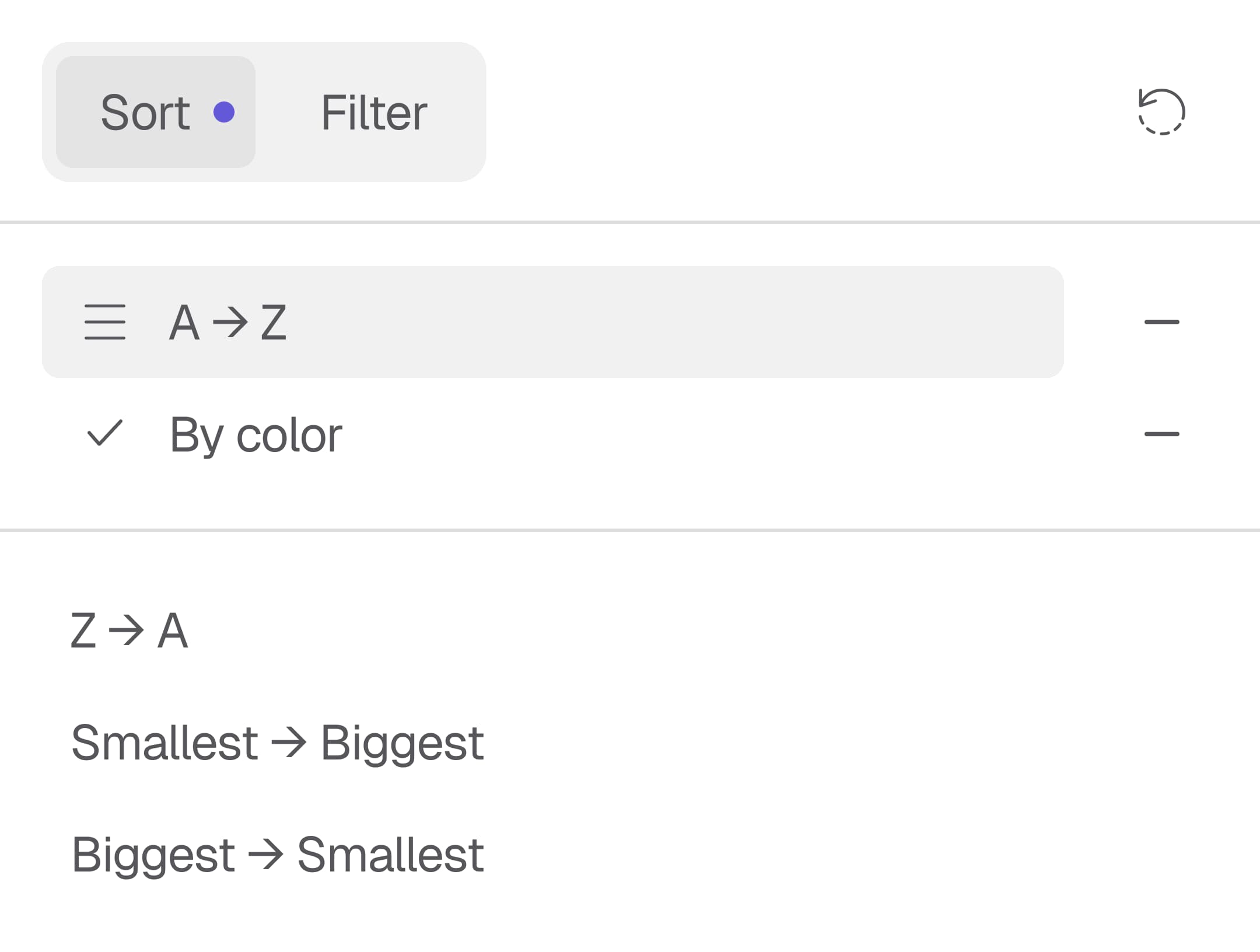
Sort
Multiple sort options, quickly arranged in the order you need, to better visualize your lab material.
Search
A search across all your metadata, run at the scale you choose.
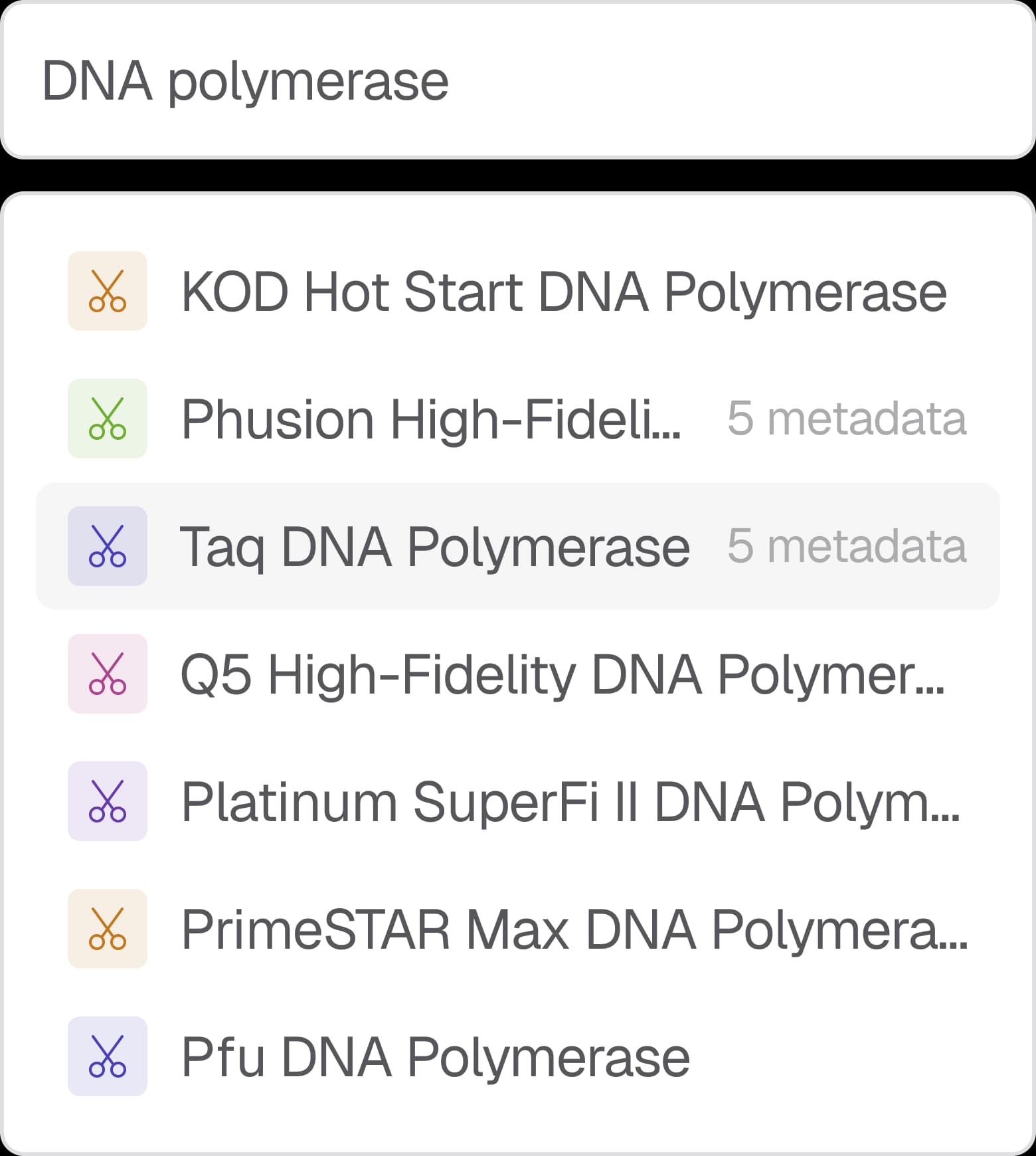
Sync your library with your protocols.
Lab notebooks do not track your lab work efficiently. This is why we invented a new tool fully dedicated to documenting all your protocol versions and variations.